Friday, June 13, 2008

The June beetle - capturing a living music box

"From some long-forgotten source, I heard that June beetles made a sweet sound while flying around. I loved music, and the method to acquire this living music box was to fasten a long thread to one of the bug's hind legs.

"Now, June beetles are about half an inch across and three quarters of an inch long. The ones in the South are dark green on the back side and have an armor-like covering over their undersides. They feed on fennel and are harmless.

June Beetle"One day, I chased down a June beetle and brought it in. It was hard to hold. That bug clawed me with its sharp toes and rooted with its sharp nose. But I held on for dear life and persuaded Mother to tie a thread on its hind leg. She wasn't too anxious to oblige me, but finally the job was accomplished and I took my musical bug outside to test it out.

"The ground around the house was level, so I chose a spot where I could turn my bug loose. It gladly took off, and I ran after it, holding on tight to the thread. The bug made a pleasing sound that was music to my ears. The sound that June beetle made—along with the Jew's harp and harmonica—was the one source of music my young ears had ever heard.

"Soon the bug grew tired and sat down. I realized the thread might hamper its movements, so I waited while it rested. Still anxious to hear more music, I urged it to fly. As quick as lightening, the bug took off with me pounding along behind it. I was thoroughly enjoying the performance until the thread slipped off. With mixed emotions, I watched my music box disappear in the distance.

"I felt bad over my loss and set about repairing it. I found another June beetle, but somehow I didn't like this one quite as well as the first one. Just the same, I hurried into the house to have Mother tie a thread on its leg. This time Mother openly expressed her dislike for such activities. Nevertheless, with strong urging on my part, she tied the thread once again. I took the new June beetle outside and let it fly as I had the old one, but the knot in the thread was too loose and slipped off. This bug also flew away, heading due north. It didn’t slacken its speed for even a moment."

From a Parks family history compiled by Lillian "Lilly Ann" Parks Adams (1880-?), at Capitola, CA, 1949-50, when she was 70 years old. She was born in Wayne County, WV, which borders Kentucky and Ohio. The story is to the best of her knowledge as a four-year-old child, and from family retellings.

source: http://ftp.wi.net/~census/lesson43.html

Original blogged at Appalachian History

Sunday, June 08, 2008

Review: Railroad Earth's "Amen Corner"


Railroad Earth
Amen Corner

I first heard Railroad Earth a few years back, soon after the release of the band’s quasi-demo, The Black Bear Sessions. Having no clue what to expect, I popped the disc in my car’s CD player. It scarcely left that spot for an entire summer.

Subsequent releases and relentless touring since then has earned Railroad Earth critical acclaim, endless comparisons to the Grateful Dead, as well as a dedicated following that is likely divided into two basic categories: Bluegrass fans that don’t mind the occasional trip out onto the experimental limb, and jam band fans that also dig a little bluegrass.

When at last I got hold of the band’s forthcoming release, Amen Corner (June 10, SCI Fidelity Records), I was naturally eager to hear the latest work of one of progressive bluegrass’s finest ensembles, and the first track didn’t disappoint. With its piddling, quiet intro that only masks the loud, upbeat tune that it is, “Been Down This Road” displays the remarkable inventiveness that has gotten Railroad Earth this far.

What follows is largely a hit-and-miss effort. Some songs simply fall flat in spite of the band’s always-masterful instrument work. In one case, songwriter Todd Scheaffer employs the standard blues-style AABA lyric structure, something that is so done over that only the best uses of it are effective anymore. Unfortunately, Railroad Earth’s take on it falls somewhat short of that.

Some tracks do achieve Railroad Earth’s delightful blend of sheer creativity and just plain fun melodies, but the album as a whole isn’t much of a showcase of it. The inclusion of horns can’t save “Hard Livin’” and “Waggin’ the Dog” seems low on willpower. Still, the sweet “Little Bit of Me” is as good as Railroad Earth gets.

The stand-out musician on Amen Corner is percussionist Carey Harmon. Where many bluegrass-rooted bands that feature drums rely heavily on tip-tapping, snare, Harmon isn’t afraid to draw more on rock influences and utilize bass-heavy, thumping beats. Of course, the entire band is owed much of the credit for arranging the songs in a way that lets Harmon shine.

Another aspect of Railroad Earth that cannot be ignored (and hasn’t been, as I noted above) is its similarity to the Grateful Dead. While the differences are obvious enough (string band versus rock and roll band), both act’s approaches to music are very similar. What’s more pronounced is Scheaffer’s vocal similarity to Jerry Garcia. Certain phrases are downright eerie as Scheaffer seems to be channeling the late virtuoso in both style and tone, leaving one remembering what is actually the better comparison, Jerry Garcia Band.

Amen Corner has enough material to keep Railroad Earth’s fans twirling for hours on end during their jam-heavy live concerts. If you’re not yet familiar with Railroad Earth, it’s advisable to seek them out, but you may be more impressed if you start with their earlier work.

Thursday, June 05, 2008

The Earl Brothers Impress Again


The Earl Brothers

Moonshine

When the Earl Brothers released their first album in 2004, the superbly-titled Whiskey, Women and Death, it was a shot of antique-sounding bluegrass in decidedly dark tones, as the recording’s name might suggest. Included on that debut disc were perhaps two of the finest original drinking songs ever recorded in the genre (“Been Sittin’ Here Drinkin” and “Bender”), as well as one of the finest and freshest takes on “Cluck Ol Hen” you’re likely to find anywhere.

Then in 2006 the band’s follow-up, Troubles To Blame, landed to a flurry of critical acclaim. The Earl Brothers had arrived and they played uncompromisingly traditional mountain music with attention-grabbing gothic undertones.

After just two offerings, a new disc from the Earl Brothers amounts to an event for a heap of bluegrass fans all over the country. In 2008, the band kept to its schedule of releasing a disc every two years with Moonshine. In it the California quartet is effectively sticking to its guns with twelve new tracks of original music.

At first listen, The Earl Brothers are easy to place. It’s gritty, gloomy, hillbilly music. This is a refreshingly simple bluegrass band that comes at the listener with no pretensions, just an honest take on life played with honest-to-God mountain music. In keeping with that theme, chief songwriter Robert Earl Davis seems uninterested in complex symbolism and extended metaphor. His formula is a simple one: See a thing, sing the thing, the thing’s the song. Consider these lines from Moonshine’s ninth track, “By the Side of the Road,” taken from the liner notes.

Billy was found by the side of the road
He wasn’t looking to good
Legs all bent from a bad accident
No one to call him there own

"By the Side of the Road" is a stand-out selection, as is the album's title track, "Moonshine" with its excellent first verse, which probably should have led off the album. Nevertheless Moonshine is thick with painful, gloomy and glorious twang that comes from another time - certainly the past, but maybe the future.

All of which amounts to pretty standard fare for an Earl Brothers album. Of course, standard fare from the Earl Brothers being as good as it is, this disc is a keeper for anyone that likes their bluegrass straight-up, with a twist of the wicked.

Saturday, May 31, 2008

Podcast Appalachia: "Appalachian Abolitionism"

The latest episode of Podcast Appalachia is now available! It's a little known fact that Appalachians, both in the North and the South, played a major role in the early movement to abolish slavery. In this episode I look at this history and examine the role Appalachians played in expanding human liberty. You can listen here or view a transcript here.

Tuesday, May 27, 2008

God shines on Appalachia

A few pictures from a Memorial Day trek into the Great Smoky Mountains National Park.


The rest of the set will be up at the Our Appalachia photo group at Flickr.

Friday, May 23, 2008

University of Appalachia School of Pharmacy Awards Degrees

Robin M. Absher, Raven Virginia
becomes the first graduate from
the Unversity of Appalachia
College of Pharmacy

On May 18, 2008 the University of Appalachia College of Pharmacy awarded its first degree to Robin M. Absher of Raven, Virginia. Ms. Absher received her doctorate of pharmacy degree from Frank M. Kilgore, Chairman of the University's Board of Trustees, and Dr. Eleanor Sue Cantrell, President of the University and Dean of the College of Pharmacy. Ms. Absher joined 66 of her classmates who were also awarded degrees during the momentous ceremony. Every member of the inaugural class had received at least one offer of employment at the time of graduation, and Mr. Kilgore estimates that over 80% of the graduating class will accept positions working in medically underserved communuties in Central Appalachia. Most graduating class members have already accepted employment offers, or will further their training in residency programs.

According to Mr. Kilgore, who was instrumental in the founding of the University of Appalachia, the graduation ceremony was the fulfillment of a dream and was a "watershed event that will be of be of huge importance to generations to come as the history of our school is written". Mr. Kilgore also expressed thanks to others who had worked toward the dream's fulfillment: associate deans Dr. Susan Mayhew, Dr. Chuck Bresse, and Whitney Caudill; and Dean of Institutional Development Terry Kilgore. These individuals deserved special thanks, according to Chaiman (Frank) Kilgore, due to their "sustained and skillful efforts toward program development, accreditation, recruitment, teaching, event organizing and fundraising" for the new school.

The University of Appalachia School of Pharmacy is located in Oakwood, Virginia. If you would like to learn more, visit the School's website here.

Photo by Eric McCarty, courtesy of the University of Appalachia


Busted not for selling babies, but for the abortion clinic

From 1951 to 1965 Dr. Thomas Jugarthy Hicks began to quietly offer babies for adoption from his Hicks Community Clinic in McCaysville, GA. Quietly, because the clinic he’d been running since the mid-1940s was not a licensed adoption agency. Hicks cared for the mundane health issues of local farmers and townspeople in the front of the clinic, while performing abortions, which were illegal during that period, in the back rooms.

Law or no law, he advertised his abortion services on phone booths, bus stations and bridges. Women came by bus, car and train to pay $100 to "fix their problem." A small airstrip was built in nearby Ducktown so the prominent could fly their daughters in from Atlanta and Chattanooga for an abortion.

fetal ultrasound imageHis black market baby-selling ring, which may have ‘moved’ as many as 200 babies with no questions asked, relied on young, poor women from North Georgia and Eastern Tennessee. They’d come to him for an abortion, and he persuaded some to carry the babies to full term. The women would reside in the clinic for a few months, or the good doctor would provide a room for them at his farm, or in the New York Hotel in adjoing Copperhill, TN, or in his apartments in the telephone company building.

Hicks knew he could count on word of mouth to bring in the baby buyers. The Fannin County Courthouse records list 49 babies, for example, who went to Summit County in Ohio. All the fathers who bought them worked in the Akron tire companies, except for a Cuyahoga Falls doctor who bought two babies. All the sales were arranged by a West Akron Goodrich employee who bought four babies for herself. All of them paid up to $1,000 for a baby no one could trace back to its mother.

Hicks made sure the birth certificates listed the people adopting as birth parents. The doctor kept no known records of the birth mothers, who discreetly vanished.

Thomas Hicks was no stranger to shady dealings. After getting his medical degree from Emory University in Atlanta in 1917, he moved to Copperhill, TN, but lost his medical license and served time in federal prison for selling narcotic pain killers to a veteran working undercover for the FBI.

While incarcerated, he studied a lung disease that kept copper miners from living past the age of 40.

Once out, he was hired by the Tennessee Copper Co. to treat miners. The only problem was, he filed more claims than there were miners with the disease.

After he was fired from that job, he opened up the Hicks Community Clinic in McCaysville.

Once a baby was available, Hicks wasted neither time nor words with his prospective buyers. "You have 24 hours to come or I call the next person on the list," he's reported to have said to more than one client.

Hicks warned his baby buyers not to be picky. If you told Hicks you only wanted a boy or you wanted a girl, you could forget about getting a baby.

It may never be known how many illegal adoptions were conducted by Dr. Hicks, who was stripped of his medical license in 1964, but never jailed. He was, after all, a member of the Copperhill Kiwanis and the Adams Bible Class of the First Baptist Church (to which he donated a Wurlitzer organ). He was known to give free medicine to the very poorest in town. He made house calls to those who couldn't otherwise get to his clinic.

Dr. Thomas Hicks' abortion clinic was an open secret tolerated by a town that appreciated the bulk of his medical contributions. "He didn't perform any services that anyone didn't request,'' noted local resident Marlene Matham Hardiman, who once rented an apartment from Hicks.

The court papers disbarring him made no mention of the black-market babies. The abortion charges against him were dropped, and he continued practicing for a time thereafter.

Thomas Hicks died of leukemia in 1972 at age 83. His lawyer, nurses, wife and son are dead. His only living relative, a daughter, lives in seclusion in North Carolina.


sources:www.people.com/people/archive/article/0,,20124848,00.html
freepages.misc.rootsweb.ancestry.com/~msroots/BMA/HICKS4.htm
query.nytimes.com/gst/fullpage.html?res=950CE1DE103EF930A1575BC0A961958260&sec=&spon=&pagewanted=1
immigrantships.net/adoption/hicksbabies.html
chronicle.augusta.com/stories/012098/met_LG0411-9.001.shtml


Originally blogged at Appalachian History

Tuesday, May 20, 2008

Redistilled

In the current edition of Knoxville Voice, Lisa Slade takes a look at the current state of moonshine in Appalachia. There's a lot of pretty well-known history, especially for those familiar with the region, but the assessments of moonshine's current cultural role is worth a quick read.

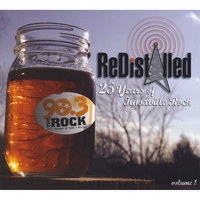
Meanwhile, I want to bring your attention to a home brew of a different sort. WUTK, the University of Tennessee's student-run radio station, is offering up a very special collection of music. As a means of generating some much-needed funds, WUTK has produced Redistilled: 25 Years of Knoxville Rock. Basically, it's a great collection of current Knoxville music luminaries covering tunes from local bands of yesteryear. Knoxville has always had a thriving yet under-appreciated music scene, and this disc celebrates it as much anything you can find in one place.

If you want a copy, order it from either CDBaby.com, or get it at The Disc Exchange. For a closer look at WUTK, check out Mike Gibson's article "College Radio Blues" at Metro Pulse.

Monday, May 19, 2008

Cherokee, NC


Wednesday, May 07, 2008

Shooting on the Appalachian Trail

Wapiti Shelter, Giles County, Virginia

Luckily for two men in Southwestern Virginia, history did not repeat itself.

The Giles County Sheriff's Office conducted an investigation today into a double shooting that occurred Tuesday night. Both men survived the shooting despite wounds to the face and chest of one, and the back and neck of the second. The shooting occurred along the Appalachian Trail between Giles and Bland counties around the Dismal Creek area. Virginia State Police arrested Randall Lee Smith after he flipped a truck belonging to one of the victims not far from the shooting site.

In 1982, Smith pleaded guilty to the 1981 murders of two hikers on the Appalachian Trail. He shot Robert Mountford Jr. three times, stabbed Laura Susan Ramsay more than a dozen times as they slept in Wapiti Shelter and left their bodies in shallow, leaf-covered graves. He was given two consecutive 15-year sentences. A plea agreement halted the case just before it went to trial in Giles County. Smith was released from prison in 1996 and returned to Giles County to live with his mother, who later died in 2000. In late March, Smith was reported missing by a neighbor after he disappeared.

Smith's earlier case was the subject of a novel by Jess Carr, Murder on the Appalachian Trail.

Investigators say Appalachian Trail Killer tries to strike again

Thursday, May 01, 2008

Podcast Appalachia: "King Coal"

The latest episode of Podcast Appalachia is now available! In this episode I look at coal. No rock has been more influential or more controversial in Appalachian society than coal; while helping fuel unprecedented economic growth in America and employment for generations of mountain people, it is also very dangerous to mine and has done much damage to the environment. In this episode I present a history of coal mining, as well as discuss the advantages and disadvantages associated with it. You may listen here or view a transcript here.

Wednesday, April 30, 2008

Mountaintop Removal Bill Dies

This is a real shame. Jeff Woods puts it in perspective:

With a coal company essentially promising to mine by blowing off the tops of Tennessee mountains, lawmakers inexplicably refused to act and all but guaranteed great swaths of ecologically important woodlands will be laid to waste.

The National Coal Corp. threatened to shut down in Tennessee if mountaintop mining were banned. So to save 234 jobs, the sum total of the company’s workforce, lawmakers decided to sacrifice the natural beauty that underpins a gazillion-dollar tourism industry.

There is some hope for next year, but tragedy looms if the legislature doesn't act soon:

Environmentalists say they’ll present their bill again next year, and the governor has indicated he might help this time. There’s a sense of urgency. Mountaintop mining is about to become more familiar to Tennessee. National Coal sold its operations in Kentucky this year to focus on mining in this state. The Tennessee Valley Authority’s coal-fired power plants are about to be fitted with newer pollution scrubbers, making this state’s high-sulfur, dirty-burning coal more marketable, according to Barger.

Via ACK (cross posted at Appalachian Scribe)

Coming Back Home

Wednesday, April 23, 2008

Podcast Appalachia: "Appalachian Music"

The latest episode of Podcast Appalachia is now available! In this episode I discuss the musical heritage of Appalachia, who influenced this heritage, and how numerous genres of music (including rock, country, blues, and others) owe a dept to Appalachian musicians. You may listen here or view a transcript here.

Friday, April 18, 2008

Sassafras tea - THE spring tonic

My mother was a great sassafras drinker. And every spring we had to have sassafras along with our poke salad (that was a wild green). The mountain people particularly gathered a lot of wild greens to supplement their diet, because most people back in those days lived mostly on cornbread and peas. My mother used to enjoy going into the mountains and picking the wild greens. They have a thing called (and I like it today—they cultivate it, by the way, in Tennessee and Virginia) highland creeces. Oldtimers called them creecy-greens.

Eula McGill
born Resaca, GA 1911
February 3, 1976 interview
Southern Oral History Program Collection (#4007)
Interview G-0040-1.
http://docsouth.unc.edu/sohp/G-0040-1/G-0040-1.html


To some Appalachian farmers, it was simply an aggressive weed tree cluttering old fields. Others believed its wood could prevent chicken lice, and so used it to build chicken houses and chicken roosts. But sassafras’ most famous attribute has always been the healing properties of the springtime tea –a spring tonic- made from its roots.

The Cherokee people utilized sassafras tea to purify blood and for a variety of ailments, including skin diseases, rheumatism, and ague (the tree is sometimes called an ‘Ague Tree’). "The country people of Carolina crop these vines (Bigonia Crucigera) to pieces," said William Bartram in Observations on the Creek and Cherokee Indians food traditions, "together with china brier and sassafras roots, and boil them in their beer in the spring, for diet drink, in order to attenuate and purify the blood and juices." The Cherokee would also make a poultice to cleanse wounds and sores, while they’d steep the root bark to treatment diarrhea or for 'over-fatness.'

They emphasized that the tea should never be taken for more than a week at a time. They didn’t know about safrole, though they knew its long term effects. The bark of sassafras roots contains volatile oils, 80% of which is safrole. Commercially produced sassafras was pulled from the American market in the early 1960s after experiments showed that safrole caused liver cancer in rats and mice.

Sassafras 'Sassafras Albidum'Early white mountain settlers, perhaps influenced by the vine/brier/sassafras concoction described above, made a beer by boiling young sassafras shoots in water, adding molasses and allowing the mash to ferment.

The varied leaf shapes are the Mitten Tree’s trademark—in fact, its Latin name was once Sassafras Varifolium. Today Sassafras Albidum ranges widely over the eastern United States (only two other species of sassafras exist elsewhere in the world: one in central mainland China, one in Taiwan).

‘White sassafras' grows along roadways in thick clusters, usually from three to six feet tall. It has roughly the same characteristics as ‘red sassafras,’ however the bark does not turn pink to red when the root is damaged.

The red variety is the species that is most prized. Generally found on hills and ridges, it sometimes grows in mountainous areas to a height of thirty or more feet. The American Forestry Association's National Register of Big Trees lists a 77-foot champion in Owensboro, KY.

According to H.L. Mencken's The American Language (1936), the word sassafras traces back to 1577 and is of Spanish origin, probably deriving from the Spanish term for saxifrage.

Native Americans in Virginia pointed out 'wynauk' to British settlers, and in 1603, a company was formed in Bristol, England to send two vessels to the New World, principally with the intention of bringing back cargoes of sassafras bark. Thus, sassafras was one of the first, if not the first, forest products to be exported from what is now the mid-Atlantic states.


sources: Observations on the Creek and Cherokee Indians food traditions, by William Bartram, 1789, From "Transaction of the American Ethnological Society," Vol. 3 Pt. 1. Extracts
everettarea.org/tales/v01/v01c30.htm
foodreference.com/html/artsassafras.html
inpaws.org/Marion%20Jackson%20Trees/Sassafras_albidum.pdf
The singular sassafras, by Henry Clepper, from "American Forests," American Forestry Assn 1989
http://ohiodnr.gov/Portals/18/publications/pdf/wild%20edible%20plants.pdf


Originally blogged at Appalachian History

Sgt York Country

Last month I visited Sgt. Alvin C. York Historic Park in Pall Mall, TN. I took many photos (as usual), the best of which I now share with you, in addition to a brief bio of a true Appalachian hero.

Sgt Alvin C. York was the most famous American World War I soldier. He famously killed 28 German soldiers and captured 132 others in the Argonne Forest in France. A recipient of the Medal of Honor and the French Croix de Guerre, he was the subject of a classic 1941 movie Sergeant York in which he was portrayed by Gary Cooper.

Ironically, York very nearly refused to serve in the war. Early in his life, he had been a bit of a hellion, enjoying hard drinking and hard living. This lifestyle was not without its dangers. One night his friend was killed in a bar fight, an event that so shook young Alvin York that he gave up drinking and joined his mother's church, becoming a devout Christian.

York's new church believed strongly in pacifism. York shared this belief that killing was a sin, which made it very difficult for him to join the war effort when he received a notice to register for the draft. York simply wrote "don't want to fight" on his registration card. He struggled mightily over what to do next, spending much time in prayer before finally deciding he must enter service.

In spite of his decision, York remained a committed pacifist upon entry into the Army, which led to numerous theological discussions and debates among his fellow soldiers. These discussions would eventually convince him that war could be justified in some cases.

On October 8, 1918, York performed an amazing and heroic feat that would make him a legend. Seventeen men, including York, infiltrated German lines to take out machine guns. Unfortunately, the Americans were hit with machine gun fire, killing six Americans and wounding three others, including York's superior, leaving York in charge of the seven remaining soldiers.

As his men remained under cover, York advanced toward the machine guns. German Lieutenant Paul Jürgen Vollmer fired repeatedly at York even as he dodged machine gun fire but failed to injure him. When Vollmer ran out of bullets, he surrendered to York. York and his men were able to capture 132 German prisoners. These deeds earned him the Medal of Honor and Croix de Guerre, among others.

Upon his return home, York remained humble and did not wish to be viewed as a hero. He decline numerous opportunities to sell his story, opting instead to marry his sweetheart and return to his home in Pall Mall. It was not until 1941 that he would authorize a film.

York's experiences in Europe led him to conclude that education was needed in his community, and he went to work establishing schools. He started a Bible school in Pall Mall, as well as Alvin C. York Institute in 1926. The Institute would struggle during the early years, and York sometimes paid teacher's salaries from his own pocket. The school was taken over by the state in 1937 and remains Jamestown's primary high school.

Sgt York was a powerful symbol of the region from which he came: a simple, kind hearted man capable to great heroism and who believed strongly in the power of education. We are all well served to remember his example.


Historic marker in Jamestown, TN

Wolf River Post Office and store. The store is still owned by the York family.

Alvin York's house.


Wolf River.


Alvin C. York's grist mill.

Wolf River.


Grist mill from the down river.


Another shot of the Wolf River.


York's former Bible school


Alvin C. York Institute, Jamestown, TN.


Wolf Creek United Methodist Church, established 1840 (York is buried here).


York's grave.


York and wife's graves.

Cross posted at Appalachian Scribe

Wednesday, April 16, 2008

Hillbilly Savants on Flickr


One of the best parts of this site is the frequent photoblogging. We've got some fine photographers around here, and they all bring us some fantastic images of the region. Lately I've become a fan of the photography site, Flickr (better late then never), so I thought I would create a place on the web where we could view photographs of Appalachia - from both our contributors and our readers - in one place. Thus I've created a Flickr Group called Our Appalachia.

If you're not already a Flickr member, then go set up an account (the basic membership is free). From there, as you upload photos, you can click the overhead "Send To Group" button and post them to the Our Appalachia. For HS contributors, if you do some photoblogging add your contributions to the group, and maybe the rest of your set that you didn't quite deem blog-worthy.

I look forward to everyone's contributions.

(Big shout-out to Katie Granju at Knoxville Talks for giving me the idea.)

Tuesday, April 15, 2008

Podcast Appalachia: "Appalachian Literature"

The latest episode of Podcast Appalachia is now available! In this episode, I examine the contributions Appalachian writers have made to American literature. You may listen here or view a transcript here.

Wednesday, April 09, 2008

A conversation with Larry Keel

A couple of months ago, I had the pleasure of sitting across the table from one of the most talented musicians of this day and age, Larry Keel. Keel rolled into town with his band, Natural Bridge, for a late night concert in Johnson City. I'm lucky enough to have friends in high places that know I'm a guitar flat picking junkie and that I would jump at the chance to meet the bearded legend. Natural Bridge will be performing at this year's Bristol Rhythm & Roots Reunion and an interview was set up to introduce Keel to the festival's web-site readers. I was invited to tag along.
Those familiar with Larry Keel know that he has a unique singing style (click here for a sample). Well, he has a unique speaking voice too. Imagine it being like George Carlin's vocal chords transplanted into Bill Monroe. He was very gracious with his time, perhaps just enjoying the fact that he wasn't sitting in his tour van. He seemed to enjoy reminiscing about his start in the music business, what he's doing now and what he's planning for the future. He also gave me a pointer or two about working on my guitar skills. Part of the interview has finally made it to the R&R website, here.
As a side note, during the show he praised East Tennessee State University and their music program for offering Bluegrass studies. He wondered out loud when the day would come that scholars outside of the region would study Bluegrass music like Classical and Jazz is studied today. He also joked to the ETSU students in attendance that if they wanted to play like him, they needed to drink heavily and drop out of college.

A legend visits our neck of the woods...

Levon Helm at the Tennessee Theatre, April 8, 2008.

More photos here.